Sustainable housing and green building solutions play the most important role in creating a sustainable planet. While our cars, trucks, and SUVs are major contributors to global warming, the buildings we live, work, and shop in are the biggest culprits.
US homes alone account for 19% of global greenhouse gas emissions and use a quarter of the world’s energy supply, according to a recent McKinsey report. This doesn’t factor in the office buildings, shopping centers, and restaurants we frequent each day. What’s worse – the amount of energy consumed by the average American household is expected to be 15% higher within the next 7 years. Developing countries like China and India are catching up to these figures quickly as well.
The Problem with Today’s Homes
- Heating and cooling consume about 60% of a home’s total energy. Rising temperatures will continue to increase this usage.
- Our washers, dryers, refrigerators, televisions, and other household conveniences account for 30% of the nation’s electricity usage and 12% of global emissions.
- Traditional residential lighting fixtures waste more than 90% of the energy they consume.
- The methods used to generate power also result in wasted energy – over 65% of the energy generated in typical power plants in the US is wasted.
Everything from clearing the land for a new home to the furnishings within it and the landscape around it can have an impact on the environment. Sustainable housing addresses much more than green energy and more efficient living. Development, design, landscaping, and even decorating must be considered for sustainability.
Today’s Sustainable Housing Solutions
Green homes are becoming more comfortable, as well as more advanced, at a rapid rate. What was once a simple, basic living space is now available with all the amenities we’re accustomed to – but with much less harm to the planet. There are a number of ways to make your existing home greener and just as many eco-friendly development practices for new constructions.
Environmentally Safe Land Development
The construction of new buildings and communities can be extremely harsh on the earth. Sustainable housing requires careful planning for land usage as well as attention to each phase of development.
- Selective clearing allows developers to only remove necessary vegetation, retaining healthy plants and trees on the property. The absence of heavy land clearing machinery is also an environmental plus.
- Rather than burning clearing debris, an eco-friendly building site typically mulches the wood so it can be recycled or possibly used in biomass fuel production.
- Whether planning a single home or a large community, eco-friendly developers must also consider the best location on the lot for the structures based on a number of factors (wind direction, terrain, drainage, direct sunlight, etc.).

Eco-Friendly Building
The architectural design of a building is an important part of sustainability. Green homes are designed to make efficient use of the available space as well as resources such as heat and water. Sustainable housing is also planned so that the home is integrated with the environment around it. Communities built in the breezy Caribbean, for example, are designed to make the most of the wind and sunlight – breezeways and walls direct the coolness into the home while sunlight is filtered through large windows to retain a comfortable indoor temperature.
The building materials and construction techniques are equally important. Net zero construction sites generate their own power and recycle all waste materials. The building supplies are typically produced locally to minimize the impact of transportation on the environment. Sustainable homes are constructed of materials that don’t detract from the planet – sustainable hardwoods from managed forests, abundant bamboo, natural clay, and recycled metals are just a few.
Sustainable Landscaping
Making the most of the resources naturally available is a big part of sustainable living. Drainage, rain water usage, and the overall wellbeing of the soil must be considered. Today’s green homes use an assortment of eco-friendly techniques to improve the health of humans as well as the earth while also improving a home’s efficiency.
- Xeriscaping was originally developed to keep Colorado landscapes beautiful in the midst of a drought but are quite popular for low-maintenance, low-water outdoor designs.
- Rainwater harvesting and storage methods minimize water usage for irrigation while keeping vegetation healthy and colorful.
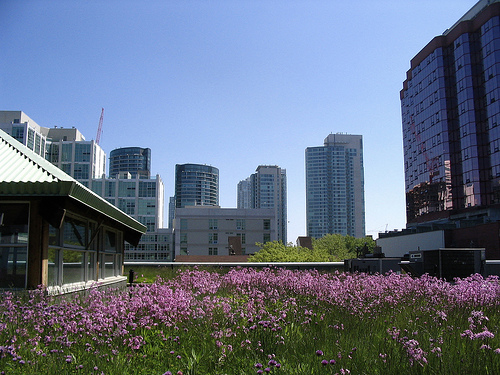
- Green roof landscaping is ideal for urban areas and can improve air quality while cooling the atmosphere.
- Vertical landscaping and green walls are also perfect options for abundant, carbon-cutting plant life without expansive yard space.
- Rain gardens are often integrated with drainage systems and, when properly designed, will collect, filter, and store rainwater to irrigate a variety of low-maintenance plants.
Green Interiors
After a house is designed and constructed, and the yard is landscaped, there are several ways to increase sustainability and environmental-friendliness inside the home.
- Energy efficient appliances, low-energy lighting, and low-flush appliances greatly reduce household energy consumption. In fact, traditional light bulbs will no longer be available in New Zealand after October of 2009.
- Furniture made of sustainable wood or recycled materials is much kinder to the environment as well.
- Bamboo flooring is elegant and more naturally abundant than typical hardwood floors. Bamboo furniture is also popular for its durability and comfort.
- Organic and recycled materials can be used for carpeting, rugs, drapery, and other accents.
- Community and household recycling plans are important as well.
Powering a Sustainable Home
Efficient but affordable green energy options are perhaps the most important aspect of sustainable housing. Coal is one of the cheapest and most common methods of generating electricity. It is also one of the most detrimental to the environment, contributing to a number of hazards including acid rain, radioactive contamination, and global warming.
Besides the environmental and health related concerns of coal power plants, coal is a nonrenewable resource and our supply will be depleted within the next half century – not accounting for the steadily increasing demand for power. Natural gas is much cleaner and much more abundant than both coal and oil, but is also a nonrenewable resource that will eventually be exhausted as well. Natural gas is most commonly used to provide heat and is the leading cause of household-related carbon monoxide poisonings in the US.

- Hydroelectric power plants are the most common uses of water for power. While these plants are cleaner and more cost-efficient than fossil-fuel power generation, the creation of dams and reservoirs can disturb the surrounding eco-system and displace those living nearby. Dam failures can also pose increased threats to the community and, typically in tropical regions, methane emissions may be exceptionally high.
- Wave power to generate electricity is still being perfected. Currently, harnessing the power of waves is costly and often unstable but a great deal of potential is seen. The world’s first wave farm is located off the coast of Portugal and funding has already been approved in both Scotland and England.
- Damless hydro power is currently a quite viable option for green energy. Small generators can harness power from currents within rivers and streams while larger turbines are presently in use in several coastal areas to generate energy from tidal power.
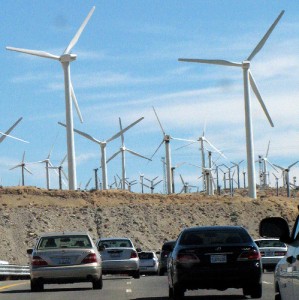
Many countries are taking advantage of the clean and pure power of the wind. The placement of wind farms is crucial to their success and even then, the amount of energy that can be generated is extremely varied and unpredictable.
The only environmental concerns with wind power are possible dangers to birds and the production and manufacturing of the turbines. Some also complain that wind farms disturb the landscaping, although many find the view intriguing.
Offshore wind farms require more extensive initial planning and can be costlier in the beginning but these wind parks do not take up usable land space and typically have greater energy potential. Construction of the first US offshore wind park, Cape Wind, will begin in 2009 in the Nantucket Sound.
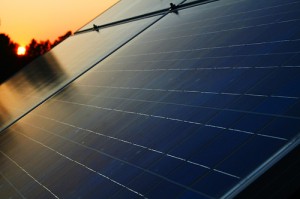
Solar power has been in use for decades but has seen tremendous improvements and increased usage in recent years. Photovoltaics, like the cells above, are the most common way to harness the sun’s energy to generate electricity. These cells can be integrated directly into a building or may be part of a solar power plant. Photovoltaics are often used to power single objects as well – solar outdoor lighting is quite popular and efficient. The energy of the sun could play a prominent role in the future of sustainability.
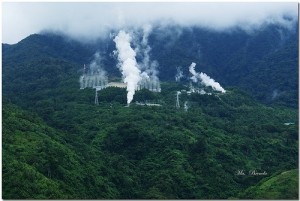
In the right location, geothermal energy production can be a quite cost-efficient method that is much cleaner than the use of fossil fuels. Currently, geothermal power plants are typically situated near hot springs, steam fields, volcanoes, and other natural occurrences of high ground temperatures. New research into enhanced geothermal systems and ground source heat pumps may introduce new possibilities for geothermal power in the very near future.
From sustainable land development to eco-friendly decorating and green energy options, the sustainable home has come a long way in just a short amount of time. Current research and development will open the door to many more opportunities to improve the planet without sacrificing the amenities we’re accustomed to enjoying.
Structural Bamboo as Sustainable Construction Material:
The Chinese Academy of Sciences correlates the use of bamboo as construction material with the end of the Stone Age and the beginning of agriculture and animal husbandry in the Neolithic Age about 8,000 years ago.
Modern Day Processing:
Structural Bamboo has been brought into the modern age by Maui-based Bamboo Technologies. In conjunction with the International Bamboo Foundation, the Environmental Bamboo Foundation, and The International Network for Bamboo and Rattan, Bamboo Technologies modernized an ancient process using a pressure and vacuum chamber and a simple borate (salt) solution. The borate permeates the bamboo and is unpalatable to beetles and termites that would otherwise love nothing better than to feast on the sugars and starch in untreated bamboo.
With proper protection from the elements, using a marine grade varnish, the same as wood requires, the borate does not leach out over time and the Structural Bamboo has a useful life expectancy as long as any commercially available building material.
Modern Day Testing:
Standards were developed to grade and rate the treated poles. Strength and wear tests preformed at the wood materials laboratories of The University of Hawaii and Washington State University showed that bamboo’s long fibers and round, thick-walled, hollow-core form make for a relatively lightweight, yet extremely durable and strong building material. Structural Bamboo exceeded 14,000 psi in tension, comparable in strength to mild steel! And by many measures Structural Bamboo outperformed Douglas Fir and concrete as well.
Modern Day Construction Material:
All of this research and testing bore fruit when, in 2004, the Structural Bamboo poles as produced by Bamboo Technologies were certified by The International Code Council (ICC) as complying with International Building Code (IBC), International residential Code (IRC) and Uniform Building Code (UBC) standards. This opened the door for the use of Structural Bamboo by architects and builders in modern building code approved residential homes and many commercial structures anywhere in the world.
Bamboo Technologies also pioneered several methods of joining bamboo poles together to deliver complex structural elements and trusses that allow a wide range of elaborate architectural designs for a variety of high stress applications.
Hurricane and Earthquake Strong Designs:
Bamboo Technologies has developed technical and real life expertise in bamboo construction since it started all this over fourteen years ago. To bring to market the first and still only building-code certified Structural Bamboo buildings in the USA, Bamboo Technologies developed and tested a construction system that plays off the natural strengths of Structural Bamboo to manufacture very strong buildings and allow for straightforward analysis by structural engineers.
The system uses certified bamboo poles to prefabricate finished bamboo structural panels. The finished panels allow for rapid onsite erection of the structures and ease shipping to assembly sites around the world.
Many of the structural panels serve as single and double member trusses with bamboo struts and steel joint connectors built in. Vertical truss elements in the walls with the bamboo struts and steel connectors tie together to withstand the lateral forces exerted by high winds. The main roof trusses have ridge trusses between them to resist longitudinal forces on the roofs. On the larger buildings additional trusses are added between the mains at the top of the walls to transfer forces to the vertical elements in the walls. These vertical trusses are then anchored to the foundation.
Exceptional Performance:
Bamboo Technologies’ factory in Vietnam built several cottages for assembly at a resort on Rarotonga in the Cook Islands off New Zealand. Structural engineers rated the buildings’ design to withstand a wind load of 80 mph. In fact, in 2005, the buildings withstood winds measured at 173 mph in three separate hurricanes.
http://www.bambooliving.com/
Nice post. Have subscribed to your RSS feed!
Using a solar power is a good idea because you can save your monthly electric bill. I just wonder how if there's no sun does it still work?
Using a solar power is a good idea because you can save your monthly electric bill. I just wonder how if there's no sun does it still work?
thats really cool eco inventions.. but it is better try not to overdo this!!
I would Like to use this article on my website, If you will allow it, please let me know, thanks