Top 15 Eco Innovations of the 21st Century
January 4, 2009
We recently posted the top 10 eco innovations of the 20th century; now, as we get another year closer to the end of the first decade of a new millennium, we’ll take a look at the most innovative green advancements made so far in the 21st century…
Solar Aviation
The solar powered Zephr set records for unmanned non-fueled flight in August of 2008, flying for more than 83 and a half hours straight, while plans for manned solar airplanes are getting closer and closer to becoming reality. The Solar Impulse, featuring an 80 meter wing span and lithium ion batteries, is proposed for test flights in 2009. By 2011, the Impulse plans to be the first manned solar plane to circle the world. The trip will be broken into a series of legs with 4 to 5 stopovers. Advancements in battery technology could make a 2 passenger solar plane possible in the near future – possibly multi-passenger or cargo planes in the years to come?!
Poop Power
The technology to reuse animal waste to generate energy is one of the greatest eco innovations of the 21st century. Dairyland Power operates 3 animal waste to energy plants in Wisconsin; Pacific Gas and Electric has made an agreement with Bioenergy Solutions to use their “pipeline quality natural gas derived from cow manure” to supply Fresno County residents with gas; there’s also a plant in Northwest Washington that supplies electricity generated from animal waste. These are just a handful of similar plants already in operation or in the planning stages.
Solar Powered LEDs
Solar powered LEDs are commonly used for garden and landscape lighting. New uses for these clean and bright sources of light include solar powered street lights, energy-free reading lights, and low cost solar powered lanterns to replace the use of kerosene lamps in many developing countries.
Bamboo
Bamboo has been around (and in use) for centuries – it was used to make paper, bowls and cups, and even weapons in early China and the first bamboo floors were produced in 1993. 21st century eco innovations have taken bamboo to all new levels. Bamboo skateboards, unique furniture, disposable biodegradable plates and utensils, bamboo textiles for 100% bamboo clothing, and even bamboo golf tees that easily shred to nourish rather than litter the greens are all now available as green alternatives.
Powerisers
While the concept of jumping stilts came about just before the turn of the century in 1999, these innovative products have gained their fame in the past few years. Powerisers, Power Skips, and a number of similar brands are now available around the world. While their manufacturing isn’t especially eco-friendly, Powerisers rival the quickness of a bike commute but with much more excitement. Treehugger first featured Powerisers in 2006, recently updated to include the extreme sports side of Powerisers last March.
SIP Prefab and Modular Building
Structural insulated panels (SIPs) have been around for decades – Frank Lloyd Wright actually used SIPs in his homes in the 30’s and 40’s. The first foam core panels were made in 1952 by Alden B. Dow, one of Wright’s students and son of Dow Chemical Company’s founder. Technology in the 90’s took SIPs to an all new level and are now the most cost effective and energy efficient way to build, especially prefab and modular homes.
The first manufactured home built with foam core panels was Concept 2000, a project by Champion Homes and Pacific Northwest Laboratories completed in 2001. The double-wide manufactured home traveled 300 miles before setup, arriving at the destination with little to no structural damage – even suffering fewer drywall cracks than typical transported homes. The Washington home was proposed to use nearly half of the electricity consumed by traditional manufactured homes, but I’ve found no evidence to support their continued use in mobile home construction.
Other applications of SIPs in green building are growing in leaps and bounds, promising to be the building material of the 21st century. Modular, timber framed, and extraordinary, off-grid hybrid houses all make use of foam core panels to increase efficiency and decrease environmental impact.
Dissolving Clothing
Clothing and fashion have long been a popular and necessary part of society, but increased spending and limited technology for recyclable materials has resulted in heaps of fashionable threads taking up space in landfills. Designer Helen Storey, along with professor Tony Ryan and fabric designer Trish Belford, created polymer-plastic clothing that slowly dissolves away in the wash. The fashions, displayed and dissolved at the Wonderland exhibitions in Sheffield and Belfast, are more of a statement than a new fad – but an intriguing eco innovation, nonetheless. The 26 day exhibit at Sheffield also showcased dissolving plastic bottles that miraculously grow colorful flowers after the plastic disappears under the tap.
Green Gadget Power
We’re a gadget-dependent society. The 21st century has seen the birth of an array of green inventions to keep our electronics charged up whether we’re at home or on the go. The ChargePod 6-way charger can charge phones, iPods, Bluetooth headsets, and other mobile electronics excluding laptops. On-the-go charging comes from the wind with the hymini or from the sun with the solar light charger or the portable Solio. The solar panel sunglasses above are stylish, block the sun, and charge your iPod wherever you go.
Cleaning Robots
The iRobot family of cleaning robots have made 21st century cleaning much easier – indoor and out. A few companies are starting to take the concept to a greener level, eliminating the need for electrical charging. The Solar Breeze above is a robotic pool skimmer that continuously cleans the pool by the power of the sun. The solar powered Automower below is made by Husquevarna and features zero emissions with lower noise output.
Electronics Recycling…
Electronics waste has become a tremendous concern in the age of technology. Mercury, lead, cadmium, and other chemicals found within typical electronics seep into the soil and the water supply as our discarded televisions and computers take up space in landfills. Regulations regarding the export of electronics waste, as well as incentives for recycling or reusing, have made a significant impact on the growing e-waste problem. Many electronics manufacturers provide e-cycling programs along with Best Buy, the US Postal Service, and several other retailers and private organizations. Visit My Green Electronics to find a place that can reuse or recycle your old electronics.
And Recycled Electronics
Besides the super cool and extremely unique recycled computer watch above, the 21st century is seeing a great collection of new electronics made from post-consumer recyclables or renewable resources. The Dell Studio Hybrid is made of recycled materials, packed with recycled materials, and uses 70% less power than traditional models while the Macbook Air boasts an aluminum casing and freedom from the lead, mercury, and other toxins commonly found in a laptop. The Nokia Evolve is a greener mobile phone made with mostly renewable materials and 60% recycled packaging; Samsung’s Eco-Phone lineup are made of bioplastics derived from corn.
The Reusable Shopping Bag
In the past, Americans have thrown away about 38 billion plastic bags each year. Reusable shopping bags have been around for centuries, but it wasn’t until the 21st century that their importance to modern society was globally recognized. The first plastic bag surcharge was an initiative in Ireland, began in 2003. Single use plastic bags have been banned in South Africa, China, and a number of European countries. Taxes on thicker shopping bags are common and some areas require shoppers to pay for plastic bags. In the US, a number of stores and local governments are taking similar actions – increasing the appeal of reusable shopping totes
Offshore Wind Farms
Offshore wind farms have supplied power in Denmark since 1991; the first offshore farm in the UK was constructed in 2003. While large scale wind farms are becoming common sights on American land, the first offshore facility isn’t too far in the future. Cape Wind, off the coast of Massachusetts in Nantucket Bay, has been approved and permitting is projected to be complete by March.
Magnet Power
Magnet powered skateboards and Shake Control magnetic powered remotes are just the beginning of the roles magnets and electromagnetic fields will play in the future of sustainable innovation. The magnetic motorbike above features a hybrid cross between an electromagnet and a permanent magnet within the motor and a battery that charges electrically in about 6 hours. With a top speed of about 93 miles an hour and the ability to travel 112 miles on a charge, the concept may be the future of green transport.
Air Cars
A spark of green innovation that faded away quicker than it was kindled, the compressed air car was first invented in 1932 by JM Custer of Arkansas. The concept has regained interest and should soon be the eco-friendly car of the 21st century. Zero-Pollution Motors in New York plans to build America’s first air car, based on technology by MDI, by 2010 with a sticker price of just $18,000. There are a number of other manufacturers working on air car concepts as well.
Top 10 Eco Innovations of the 20th Century
December 19, 2008
We’ve come a long way with green technology over the past century but not every eco innovation from the past is worth forgetting…

This Shell test car was modified in 1973 to achieve over 376 miles per gallon and still holds the Guinness World Record for gas mileage. The ‘59 Opel has a completely gutted interior – except for one bucket seat for the driver – and the top was chopped to lighten the weight of the car and improve aerodynamics. The axle and tires were both changed but the only modification to the engine was an insulated fuel line to turn the liquid gas into a vapor.
It’s not clear if this podular beach side resort was constructed with the environment in mind or simply for tourist appeal, but San Zhi was a project commissioned by the Taiwanese government in the 1970’s. It’s rumored that several died during the construction, causing the prospective vacationers to stay away. Now the seaside pods are abandoned and said to be haunted by the spirits of those who lost their lives in vain.
These tiny little microcars were all over European roads in the 1950’s and early 60’s. Some ran on 3 wheels and some 4, but they were all designed to conserve fuel, energy, and raw materials. Microcars were electric or operated on a small gas engine and could typically only carry 1 or 2 passengers, including the driver. This transport concept has finally been reintroduced, starting with the birth of the Smart car in 1998.
Just before the turn of the century, in 1897, the Benedetto family traveled through the streets of New York City with a pushcart collecting old rags, newspapers, and other trash in an effort to recycle and reuse rather than dump. Today this first recycling company is still owned and operated by the Benedettos, but it is now known as TFC – a company based in Chesapeake, Virginia.
While William Cobb was credited with the first prototype for a solar powered car in 1955, his 15 inch model wasn’t too realistic for anyone other than Barbie. Englishman Alan Freeman developed the solar powered car above in 1979 and is thought to be the first human-sized solar vehicle.
Now home to one of New England’s best ski resorts, Crutched Mountain was the location of the first wind farm in the world. 20 turbines scattered the mountain top, installed in 1980 by now bankrupt company US Windpower. Unfortunately, the windmills were consistently in need of repairs and the wind farm was a flop.
550-feet of piping and 2 large tanks meant this hydrogen powered van only had room for 2 passengers, but the 1966 creation by General Motors boasted a top speed of 70 MPH and could travel 120 miles. Exploding hydrogen tanks and an extreme cost were reasons to scrap the concept.
The solar water heater above is currently in use in South Africa, but the first solar water heater was patented in 1891. By 1909, the idea was perfected by William Bailey and sold as the Day and Night heater for about $180. The discovery of natural gas in the 1920’s ended the use of most solar water heaters until their reappearance in recent years.
Built in 1891, the Schermerhorn Building in New York City went green after renovations in 1992 – 6 years before LEED certified practices were adopted in the US. The building now houses the headquarters of the National Audibon Society and features daylight dimming sensors, automatic light turnoffs, a gas-fired heater-chiller, comprehensive recycling system, and energy efficient heating.
National standards for organic foods weren’t set by the USDA until the 1990’s, but the organic movement found its start among small farmers in 1972. Sweet Earth Organic Farm is one of the few purely organic farms from this era still supplying natural produce today. The 120 acre farm is located in southwest Wisconsin where Farmer Renee specializes in heirloom plants and has tended the earth for more than 30 years.
Futuristic Green Transit: 10 Vehicles for 2010
November 11, 2008

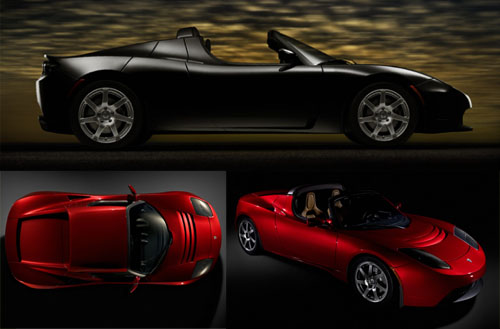
Want to green your ride, but can’t afford a Tesla? That’s okay… there are plenty of cool (if not quite so flashy) new transportation options coming down the pike that will cost you less than $100,000. Some of ‘em you can even build yourself.
Read more
GYM: Concept Car for Physical Fitness
September 3, 2008

If being an electric car isn’t enough to make you look at this concept vehicle with an appreciative eye, would it help to say that it incorporates personal workout into it’s operation? That’s right, it is flashy, sporty, and helps keep you healthy. The car could be charged up using a connection to a conventional electric outlet, but it can also be charged by another, rarely tapped form of power: the human body engaged in physical exercise. It has a stepping machine, a bench press, a rowing machine, and you can even do some pull-ups, keeping you physically fit at the same time as you put that aerobic energy to a practical use.
Coventry University, located in the UK, has been the origin of a number of gadgets and inventions designed to make our lives better without undo environmental impact. We highly reccomend checking out some of the articles in Innovate: Applied research at Coventry University.


Comments