Great Green Booze: 12 Sustainable Holiday Spirits
December 26, 2008
With everyone else on the planet jumping on the green bandwagon, it was inevitable that the purveyors of our most popular mind-altering substance have jumped on board. We’ll take you on a tour of some of the best…
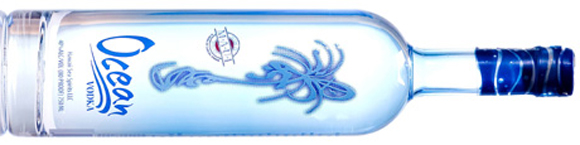
Ocean Vodka Maui
Guess where this drink comes from? If you’re thinking island breezes and big, big waves… you’d be right. It’s distilled in Hawaii by a couple of surfer dudes who really know their drinks. And when they say ocean, they mean ocean: the water they use is pumped from a pristine sea-bed aquifer that is both contaminant-free, and contains an out-of-the-ordinary natural mineral content. Ocean Vodka is USDA certified organic, from GMO-free organic rye and corn, and run through their cool new four-column distillation process. And we just like the idea of surf vodka.

Rain Vodka
Rain, rain… don’t you dare go away. This precipitate spirit is handmade in small batches at a Buffalo Trace, Colorado distillery. Unusually, it’s made from 100% organic white corn, a cold-water sweet-mash fermentation, and a seven-distillation process. The result: a clean, smooth drink that’s been winning accolades and awards, including gold medals at this year’s World Spirits Championship. They also offer some creatively-flavored vodkas, including Cucumber Lime, Honey Mango Melon, Red Grape Hibiscus and Lavender Lemonade.
Benromach Organic Single-Malt Scotch
Whisky is tricky – with casking times of 9 years and longer, you have to do a lot of advance planning to get a new product to market. Some companies are in that process, but so far only one Benromach has a widely-available, certified-organic single malt whisky. Even their casks are virgin oak from environmentally managed forests! This is what we call a “young spirit”, and will probably be better as it matures some, but even so it picked up a Supreme Award at the Scottish Food and Drinks Excellence Awards, 2007

Maker’s Mark
There’s more than one way to be planet-friendly. Although they haven’t gone organic (there may not be enough organic grain available to meet their production needs), their Kentucky plant has been fully greened-up with the help of Ecovation
Taking a big step beyond basic recycling and wastewater treatment, they have an on-site anaerobic digestion facility that turns waste into bio-gas, offsetting 30 percent of their natural gas use (you’d think everyone would do this, but you’d be wrong). So now they’re not just one of America’s best bourbons; they’re a leading light in the movement for sustainable distilling.

Death’s Door Gin
The name isn’t exactly auspicious – how often have you woken up after too many gin & tonics to feel like you’re at death’s door? But these folks, from Washington Island, Wisconsin, not only source locally, they name locally, too; Death’s Door is the name of the straight that separates them from the mainland. Apparently, they live sustainablyl at death’s door – with organic Great Lakes wheat and wildcrafted juniper berries right from the island. They make a pretty decent vodka, too.

Peak Organic Eau de Vie
That’s French for “Water of Life”, but at 18% alcohol these beverages aren’t as strong as the similarly named (in different languages) akvavit or whisky. Peak Spirits (which also make organic gin, vodka, and grappa – you can see the full product line in the picture) use locally-grown Colorado peaches, pears, apples and cherries, slowly fermented in chilled stainless tanks. The spirit is distilled in very small batches in a a copper-pot still. All products are 100% USDA-certified organic.

Momokawa Saké
Ah, sake… whether cold or hot, this Japanese rice wine delights the palate and befuddles the senses. Momokawa does their Junmai Ginjo sakés (best served cold) up green, with USDA organic certification – the first and so far only sakés so blessed. Every step is certified, from the rice to the yeast to the milling and brewing equipment. The bottles even include a recycled screwcap and tree-free labeling. The taste is exceptional, as well, smooth and delightful.
Leblon Cachaça
Unless you’ve been living (and drinking) under a rock, you’ve probably had a mojito by now. But you’ve probably never had a caipirinha, Brazil’s national drink, made with cachaça. This stuff – made from fermented sugar cane but lighter and more delicate than rum – is the third most popular drink on the planet, but hasn’t even been available in the U.S. until recently. Now you can get an earth-friendly version, made with organic sugar cane, processed in alembique copper potstills, then finished in XO Cognac Casks.
VeeV
What’s better than organic? Organic + superfood! Acai is an Amazon berry that contains 57% more antioxidants than blueberries and 30 times the heart-healthy anthocyanins of red wine; paired with vitamin C-rich acerola cherries and prickly-pear juice, this is not just a drink, it’s a hangover-prevention treatment in a bottle. Talk about pre-emptive strikes…Try it with tonic and lime, or as a martini or margarita base.
Loft Lemongrass Cello
Limoncello is a popular sweet liquor, but let’s face it, it’s not that different from drinking sugar-laden, artificially-flavored and -colored lemon pudding. Bleh! Go with this healthy, green alternative from LOFT. “LOFT Organic Liqueurs was created by Lisa Averbuch to save people from the synthesized flavor and bright neon color of your average apple martini,” says the website, and they have achieved their goal in spades, becoming the first certified-organic liqueur in the U.S. by eschewing sythetic fertilizers, artificial colorings, or nasty processing with ionizing radiation. They sweeten with organic agave nectar instead of sugar, source from biodynamic farms where possible, and use green packaging. It’s even certified EarthKosher. If you dont feel like lemongrass, try the lavender or the spicy ginger.
Sebor Absinthe
You can’t get much greener than absinthe, and Bohemia-based Sebor’s is the greenest of the bunch, using organic herbs, including the traditional wormwood (artemisia absinthium). And while most modern absinthes use artificial colors to achieve the distinctive green color, Sebor does it old-school, with chlorophyll. The grain alcohol spirit isn’t organic, unfortunately, but the overall experience is pretty much earth-friendly (if not head-friendly – try starting your drinking with a shot of Veev to avoid the traditional absinthe hangover).
Wines
Fine winemaking is basically about figureing out what works, and then doing it over and over again for a couple of centuries. That’s why it takes so long for new wine regions to start producing spectacular wines, and the same thing applies to organics. Even in established vineyards, going organic means change – and it takes a few seasons to figure out which changes work well, and which don’t work well at all.
So while organic wines have gotten – to put it gently – a mediocre reputation, we’re moving out of the experimentation phase and into the perfection phase. There are literally thousands of organic wines on the market now, and many of them are getting very, very good.

Coturri Estate Vineyards 2005 Zinfandel
The Coturri winery has been producing certified organic wines since 1993; their 2005 zinfandel just hit #4 on the Wine Report’s 2009 list of top organic wines, a formidable achievement as this $32 bottle parachuted into a list dominated by $100+ vintages. Grown in very small batches without irrigation, the flavor has been described as “astounding”. “This wine has black fruit in the nose, a very sweet mid-palate and good balancing acidity in the finish.” (Note – within three days of the Wine Report list hitting the news, Coturri sold out of this vintage. Check out their other years, and other wines – everything these guys put out is excellent.)

Frey 2005 Biodynamic® Syrah
Another Northern California offering, Frey Vineyards has a wide selection of organic wines, but this is probably the best, with its big jammy flavors and refined tannins. It was awarded a GOLD MEDAL in the Critics Challenge at the San Diego International Wine Competition, and has a fistful of silver and bronzes from international competitions.
….Is it worth it to go organic?
These drinks will cost you a little more (or a lot!), leading some to question whether organic realy makes a difference when it comes to hard alcohol.
There is one school of thought that says, “Look, the distillation process removes all impurities and leaves nothing but basic spirit; It’ll strip out all pesticides and chemical fertilizers, so way pay more?”
Anyone who tells you that is neither a drinker nor a chemist, and they probably don’t know much about alcoholic beverages or organic living, either.
In a nutshell:
a) Cheap booze gives you hangovers while premium stuff does not – ever wonder why?;
b) lots of extraneous stuff is carried through the distillation process;
c) producers use the finest ingredients and fine-tune their production facilities because it affects the taste of the end product; and
d) all that aside, organic farming is better for the environment and the planet, regardless.
Sean Evans of the New York Daily News did a scientific experiment, knocking back 11 shots of pure organics one night that left him feeling just peachy the next morning, while a duplicate bender on the non-organic counterparts left him bleary and hung-over. This is not subjective, folks, this is science!
18 Last-Minute Green Gadgets for the Holidays
December 22, 2008

Have you finished your holiday shopping? There’s just a few days left to pick up any last-minute gifts – and we have some green gadgets that you don’t want to miss! The retro-reminiscent solar powered wreath above is available from Solar Santa for about $49.99.
Even More Creative Shipping Container Houses
December 21, 2008
Since our previous post on shipping container houses, the craze of prefab structures and cargo homes has accelerated to new levels. From quiet mountain cottages to chic container hotels, it’s easier (and cooler) than ever to call a rusty old shipping container home sweet home. Take a look at a few of the possibilities….
Read more
Top 10 Eco Innovations of the 20th Century
December 19, 2008
We’ve come a long way with green technology over the past century but not every eco innovation from the past is worth forgetting…
This Shell test car was modified in 1973 to achieve over 376 miles per gallon and still holds the Guinness World Record for gas mileage. The ‘59 Opel has a completely gutted interior – except for one bucket seat for the driver – and the top was chopped to lighten the weight of the car and improve aerodynamics. The axle and tires were both changed but the only modification to the engine was an insulated fuel line to turn the liquid gas into a vapor.
It’s not clear if this podular beach side resort was constructed with the environment in mind or simply for tourist appeal, but San Zhi was a project commissioned by the Taiwanese government in the 1970’s. It’s rumored that several died during the construction, causing the prospective vacationers to stay away. Now the seaside pods are abandoned and said to be haunted by the spirits of those who lost their lives in vain.
These tiny little microcars were all over European roads in the 1950’s and early 60’s. Some ran on 3 wheels and some 4, but they were all designed to conserve fuel, energy, and raw materials. Microcars were electric or operated on a small gas engine and could typically only carry 1 or 2 passengers, including the driver. This transport concept has finally been reintroduced, starting with the birth of the Smart car in 1998.
Just before the turn of the century, in 1897, the Benedetto family traveled through the streets of New York City with a pushcart collecting old rags, newspapers, and other trash in an effort to recycle and reuse rather than dump. Today this first recycling company is still owned and operated by the Benedettos, but it is now known as TFC – a company based in Chesapeake, Virginia.
While William Cobb was credited with the first prototype for a solar powered car in 1955, his 15 inch model wasn’t too realistic for anyone other than Barbie. Englishman Alan Freeman developed the solar powered car above in 1979 and is thought to be the first human-sized solar vehicle.
Now home to one of New England’s best ski resorts, Crutched Mountain was the location of the first wind farm in the world. 20 turbines scattered the mountain top, installed in 1980 by now bankrupt company US Windpower. Unfortunately, the windmills were consistently in need of repairs and the wind farm was a flop.
550-feet of piping and 2 large tanks meant this hydrogen powered van only had room for 2 passengers, but the 1966 creation by General Motors boasted a top speed of 70 MPH and could travel 120 miles. Exploding hydrogen tanks and an extreme cost were reasons to scrap the concept.
The solar water heater above is currently in use in South Africa, but the first solar water heater was patented in 1891. By 1909, the idea was perfected by William Bailey and sold as the Day and Night heater for about $180. The discovery of natural gas in the 1920’s ended the use of most solar water heaters until their reappearance in recent years.
Built in 1891, the Schermerhorn Building in New York City went green after renovations in 1992 – 6 years before LEED certified practices were adopted in the US. The building now houses the headquarters of the National Audibon Society and features daylight dimming sensors, automatic light turnoffs, a gas-fired heater-chiller, comprehensive recycling system, and energy efficient heating.
National standards for organic foods weren’t set by the USDA until the 1990’s, but the organic movement found its start among small farmers in 1972. Sweet Earth Organic Farm is one of the few purely organic farms from this era still supplying natural produce today. The 120 acre farm is located in southwest Wisconsin where Farmer Renee specializes in heirloom plants and has tended the earth for more than 30 years.
Modern Space with Yesteryear’s Footprint – Sustainable Housing for the 21st Century
December 14, 2008
Sustainable housing and green building solutions play the most important role in creating a sustainable planet. While our cars, trucks, and SUVs are major contributors to global warming, the buildings we live, work, and shop in are the biggest culprits.


Comments