Design and Architecture


The original Spiral Island was the talk of the world: a man-made floating island constructed from 250,000 plastic bottles that could drift and relocate as needed until it was destroyed by disaster. Now the new Spiral Island is slated to open to the public within the next few months in Laguna Makax near Isla Mujeres. The new island has drawn in donations, volunteers and visitors from all parts of the world and walks of life - people inspired by what may be one of the most impressive do-it-yourself projects of modern times.

(Above: the old Spiral Island, Below: The new one under construction)

The infamous island has been at the center of controversies with each step forward as any endeavor this industrious and unusual is likely to be. Some claim it is a brilliant environmental design - using almost exclusively recycled materials in its construction. Others note that when the last island was destroyed it resulted in the littering of its materials and is in many ways the work of a single insane architectural genius. Still, were it not for that catastrophe those materials would still be providing a home for some and destination for others with a minimal use of non-recycled parts and clearly its creators never intended for it to be demolished in such a fashion.

There is a variety of media available to people who want to learn more about spiral island. The Spiral Islanders site has forums, a blog, photo collections and videos related to the construction and history of the island as well as the stories and experiences of those who have worked on it and the areas in which they have done so. It is easy to see how, as people learn more and more about the project, they become increasingly intrigued and many ultimately end up visiting and helping with the island itself. The Ripley’s Believe-It-Or-Not video below and photo collection are also a great place to get a feel for the island.


Find more photos like this on Richie Sowa's Spiral Island

Solar Powered Bicycle Boat

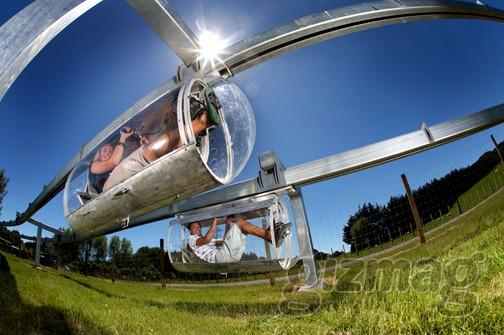
Imagine a boat that coasts along almost silently and works completely on free energy. OK, well, almost free: when it is cloudy out you may have to pedal a bit to get it going. Still, you get to toss out the pricey gas costs associated with most water cruisers and relax in the sun when the weather is nice and pedal your way to shore when it isn’t.
(more…)

Retrofitting Skyscrapers

Clearly we can’t very well tear down all of the world’s old skyscrapers for not being environmentally friendly - that kind of approach would itself be (ironic and) wasteful. At the same time, many of these buildings are projected to last for decades (or centuries) more. So what is the solution for making them green now? One rather clever proposal involves adding an auxiliary environmental layer to the existing structures that could house gardening and natural wind power production spaces.
(more…)

Recycling doesn’t have to be limited to helping the environment: it can also be a challenge and opportunity to ingenious designers who work with materials most people would consider waste to create amazing things. Some of the following designs serve multiple purposes: illustrating the material possibilities of what most would consider trash while also maximizing the aesthetic potential of what would otherwise be considered waste objects. Clothes become rugs, airline trolleys become furniture, cardboard becomes bridges and sewage turns into building blocks!

Recycled Clothing Rug
(more…)

It is all too easy to get excited about the next big sustainable technology for saving energy or producing non-polluting power - and forget the flaws in many of these ideas. Some of the best projects show smart out-of-the-box thinking but lack feasibility or, in some cases, might do more harm than good. While these ideas may not work at least scientists, politicians and other innovators are beginning to explore alternatives.

Biofuels Good or Bad
(more…)

Next Page »